9:02 AMCALL, IN YOUR VOICE
“Morning Mom! Did you sleep all right?”

Companionship through memory changes and dementia
It gets to know the person (the people they care about, the rhythms of their day, and the things they love to talk about) so conversations feel familiar and reminders come when they’re most helpful. And everything it knows begins with what you share about the person you know and love.
“Morning Mom! Did you sleep all right?”
“There's fresh strawberries in the fridge.”
“I'm right here. Can you see me?”
“Ask me as many times as you like.”
It's a behavioral expression to be understood.It's a need to be met.
Built around person-centered care, accepted memory care best practices, and peer-reviewed studies.
A geriatric psychiatry perspective
“Seeing AI bring tangible relief to dementia patients through KindredMind's innovative voice companionship model surpasses most non-pharmaceutical treatments we have at the present time. This trajectory should make us all optimistic in our quest to employ non-pharmaceutical treatments in the battle against dementia.”
Shadee Giurgius, M.D.
Adult and Geriatric Psychiatrist · Medical Director, Healthy Brain Center · Clinical Advisor to KindredMind
As seen in
Early memory changes
“They're still themselves, but lately they forget appointments, repeat questions, and lose the thread of familiar conversations.”
Dementia support
“They call and ask the same question again and again. I reassure them each time, but minutes later, they have forgotten the answer.”
What this actually is
Wherever they are. On the landline, a cellphone, or a tablet in the room where they spend their day.
Or just a reminder. On days that only need to stay on track, a short, kind check-in arrives by call or text, with no conversation needed.
In a voice that fits. Warm & friendly on any setup. For dementia support, a voice they already know and trust: yours, with consent, for the moments only you can settle.
It is AI, not a person.
Choose the experience that's right for your family, shaped for early memory changes or for the reassurance dementia so often calls for.
Early memory changes
For older adults experiencing mild cognitive decline who need gentle structure and engagement.
Why this is different.They still run their own day: independent, capable, on their own terms. The products built for this stage are pill reminders and emergency buttons, and neither one is company.
What the research suggests.In the I-CONECT trial, socially isolated adults aged 75+ with mild cognitive impairment who participated in structured conversation four days a week had higher MoCA scores after six months than the control group. That finding relates specifically to structured conversation. Read our guide to loneliness, social connection, companionship, and cognitive health for the wider evidence boundaries. It is one reason KindredMind Voice and Presence are designed around engaging conversation. KindredMind Reminders serves a different need: short call or text prompts that help keep the day organized.
Dementia support
For older adults who need repeated reassurance, validation, and familiar comfort.
Why this is different.They call, you reassure them, and minutes later they call again, because they do not remember calling. The usual answer in this market is call screening. The clinical guidance says the opposite.
What the guidance says.UCLA's caregiver training puts it plainly:
"Because people with dementia are forgetful, they will forget that they called before or asked the same questions even 5 minutes ago."
UCLA Health, Caregiver Training: Repetitive Phone Calls
It recommends reassurance and reaching out first, and contains no recommendation to screen a call. KindredMind Voice and Presence are designed for conversation and reassurance. KindredMind Reminders serves a separate role by sending scheduled call or text prompts.
Guided by established dementia care practice.
Some days need a voice on the phone. Some need a face on the tablet. Some just need a reminder at the right time.
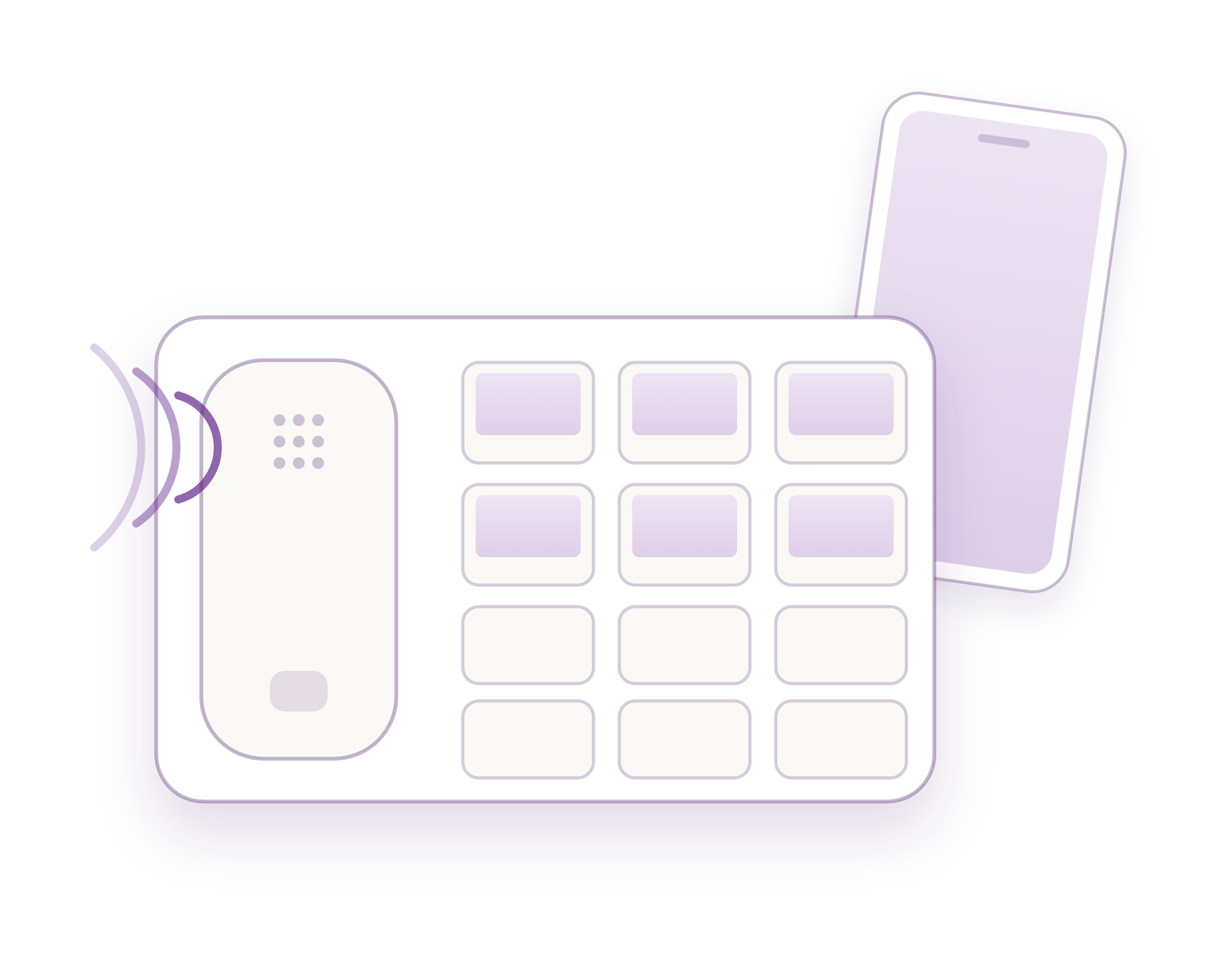
Cellphone, Landline or Big Button Photo Phone
Voice
KindredMind Voice talks with them on the phone they already use, whether that is a cell phone, a big button photo phone, or the landline in the kitchen. It answers when they call, it calls them, and it gives gentle reminders through the day. Nothing new to learn, and nothing new in the house.
A real conversation, not a recording and not a phone menu.
One phone line, two very different jobs. You choose which one during setup.
EARLY MEMORY CHANGES
DEMENTIA SUPPORT
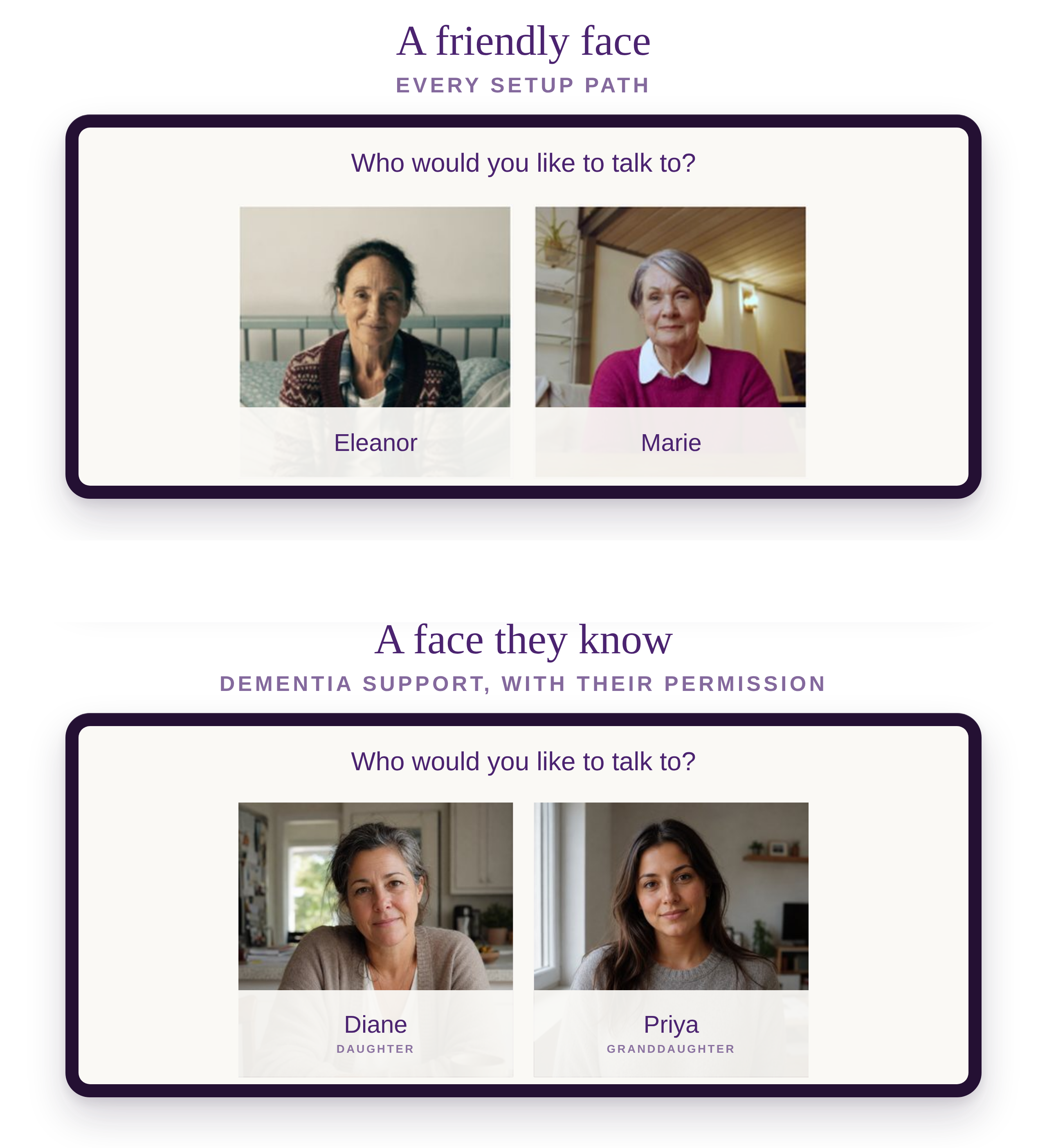
Tablet companion
KindredMind Presence is a companion on a tablet, in the room where they spend their day. A face they can see as well as a voice they can hear, for conversation and company whenever they want it.
Nothing to schedule around. No one has to be available for a video call for it to happen.
One tablet, two very different jobs. You choose which one during setup.
EARLY MEMORY CHANGES
DEMENTIA SUPPORT
Presence is for conversation and connection, not reminders. When it’s time for a scheduled prompt, like a medication reminder, that’s what Voice and Reminders are designed for.
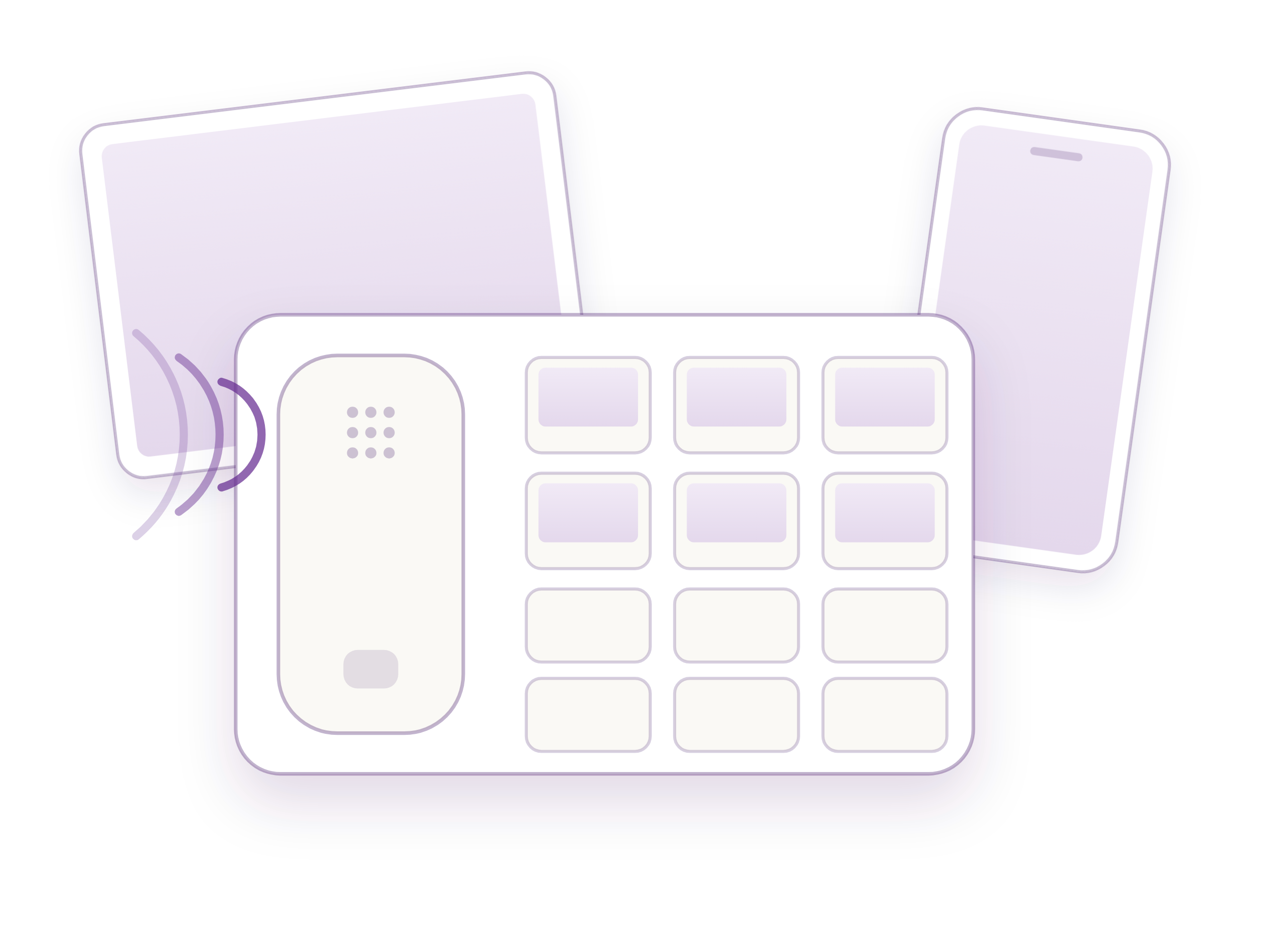
Phone, cell, or email
KindredMind Reminders keeps the day on track without needing a conversation. A short, kind reminder by call, text, or email for medicine, meals, appointments, and the visits they are looking forward to, on the schedule you choose.
Not a conversation. It says the one thing, the reminder, and goes.
For families whose loved one is still independent and just needs the day to hold together.
See how Reminders worksNothing new to learn. Cancel any time.
A changing journey
KindredMind is made for the years from mild cognitive decline through later middle dementia. Clinically, that is stages 3 through 6 on the Global Deterioration Scale.
People move through these stages differently. The stage lengths shown are averages, not a diagnosis or a promise.
Normal thinking and daily function remain completely intact.
Sometimes forgets names or misplaces familiar things, often indistinguishable from normal aging.
Forgetfulness begins to affect work, complex plans, or finding the right words in conversation.
Remembering recent events, planning, managing finances, or navigating new places become increasingly difficult.
Needs assistance with daily routines, appropriate clothing choices, and may lose track of time or place.
Requires more hands-on help with daily activities. May repeat words, actions, or experience significant personality changes.
Communication and movement become profoundly difficult; extensive, around-the-clock care is necessary.
A friendly voice plus practical reminders can add gentle structure to the day and support day-to-day independence.
As dementia progresses, reassurance is needed more, and because the fear resets, it has to come again and again. Support grows too, from reminders to a voice they already trust.
KindredMind is not a medical device. It does not diagnose or treat dementia, replace medical advice, or replace human care. It is designed to complement the people who know and care for them.
| Product | Friendly | A face or voice they know |
|---|---|---|
| Voice | A warm companion voice. Any setup. | For dementia support, a familiar voice they know, with that person's permission. |
| Presence | A companion face. Any setup. | For dementia support, a familiar face they know, with that person's permission. |
Start in a few minutes with just the essentials: who they are, how to reach them, and the reminders that matter today.
Add their stories, their routines, their relationships, and the way they speak whenever you want. Nothing is lost either way, and the companion gets more familiar the more it knows.
ONE SHARED FOUNDATION
What you tell KindredMind can support Voice, Presence, and Reminders, so the companion feels consistent wherever they use it.
WHAT MAKES IT DIFFERENT
The real difference here isn't a feature. It's a list of things we said no to, on purpose.
With the family caregiver's permission, a familiar voice, and the reassuring conversation built around it, is offered for dementia support, but only later in the journey. Earlier on, someone may sense that things aren't quite as they used to be, and still does best with conversation that engages rather than reassures.
The conversations are built on the design of a published randomized trial of structured conversation. That trial used trained people, not AI, and its results belong to the researchers who ran it.
So we make no claim about memory or cognition, anywhere, ever. What we will show you is exactly what the conversation does and why.
You get the conversation, a short summary, and any distress alerts. You do not get an engagement rating, a participation percentage, or a report on how well they did.
We measure the quality of our own side of it closely. How well it performs is on us, not a reflection of her.
Not one. Every prepared question is checked before it can ever be used, and a question with a verifiably correct answer is rejected by the system rather than left to judgment.
"What year did you get married" is a question a person can fail. "What stays with you most about that day" asks for more thought and cannot be failed.
There is a written list of things the companion does not say under any circumstance, and no statement from anyone on the call unlocks them. Profanity. Sexual or suggestive content. Slurs and discriminatory language. Any commentary on a person's sexual orientation or gender identity. Any judgment of anyone's body, weight or appearance.
The hard case is worth describing, because it happens. A person of ninety may use a word that was ordinary when they learned it and is not now. The companion does not repeat it, does not lecture them about it, and does not let them feel caught. It answers what they meant and moves on. Correcting someone with dementia about their vocabulary achieves nothing and costs them their dignity.
A family member cannot instruct it around any of this either. Instructions a caregiver writes for the companion are checked before they can reach a conversation, and ones that ask it to swear, to repeat a slur, to ask for a bank account number, or to tell someone to stop taking their medication are rejected outright.
Account numbers, identification numbers, addresses, or permission for any transaction get the same answer from anyone on the call, however urgent they say it is. Not from the person, not from a family member, not from whoever just handed them the phone.
What you choose to tell it about your loved one when you set it up is a different thing entirely, and it is yours to decide. On a call it takes nothing.
We do not read conversations for signs of decline, and we will never suggest to a family that their loved one has moved from one stage to the next. That is a clinical judgment about a named person, and a company should not be making it from a phone call.
Those are the refusals. Here is what it does that a conversation with a chat window cannot.
A chat window waits to be opened. This rings the phone in their kitchen, or arrives on the tablet in the room where they spend the day, at a time you chose.
It does not open with how are you feeling today. It comes with a subject, offers three ways in, and lets them pick.
If they were going to see their granddaughter on Sunday, it asks how Sunday went. If a story was left half told, it comes back to it.
This is the one that matters most and the hardest to fake.
Sideways: did you have coffee, was it good, was it hot, do you take toast with it.
Down: why coffee and not tea, when did that start, who did you used to drink it with, where was the best cup you ever had.
Same subject. One of them is a person being interested in you. The other is a form.
And none of it was invented here.
Every behavior traces back to a named practice in dementia care or to published research. We will tell you which, and we will tell you where the evidence is thin.
| What it does | Where it comes from |
|---|---|
| Never corrects, meets the feeling rather than the fact | The Validation Method, developed by Naomi Feil. Meets people where they are, with empathy, respect and careful listening. |
| Reassure, keep a familiar routine, reminisce together, gently redirect when needed | The Four Rs of Dementia Care, as taught by the National Council of Certified Dementia Practitioners. |
| A voice they know, for dementia support only | Simulated presence therapy. A randomized study of familiar voices and personal messages for people living with dementia. |
| Clear words, one idea at a time, patient pauses, and their own preferences | Alzheimer Society of Canada guidance. |
| Conversation shaped to the person rather than run from a generic script | Research on social connection and cognition, which finds conversation works best when it reflects a person's age, cognition, education, personality and social world. |
| Thirty minute conversations, prepared subjects, three offered and they choose | The design of the I-CONECT randomized trial. |
| Two separate models rather than one tone setting | Ours, and both are published in full. |
Where the evidence stands. Validation and simulated presence are widely taught and widely used. Systematic reviews of both have found the published evidence limited and inconclusive. I-CONECT reported cognitive test differences in its own participants, using trained people rather than AI.
So we follow established practice because it is established practice and because it is kinder than the alternative, not because anyone has proven it works. We would rather say that than imply something we cannot support.
None of this is a promise about how it behaves. It is a specification, written down, enforced in the system rather than suggested to it, and checked after every conversation.
Twenty five standards for dementia. Twenty two for early memory changes. Both published in full, including the parts that constrain us.
Voices from the care community
Caregivers, advocates, and dementia care leaders see the value of reassurance that supports the person and the people who care for them.
“What initially stood out to me about KindredMind was the thoughtful way the company approaches the balance between reassurance, autonomy, and privacy.”
“Looking back at caring for my dad ten years ago, I remember the constant toll of the ringing phone and the heavy guilt of missing a call.”
“In many ways, KindredMind reflects the same person-centred philosophy and approaches that I encourage for all caregivers.”
Support person-centered care for each resident with a distinct memory care experience and personal details shaped around their life. This works for a business, nonprofit, clinic, or care community.
Talk with our organization teamEvery resident gets their own history, routines, preferences, and family connections.
Assign early-memory or dementia support individually as each resident’s needs change.
Care teams can manage reminders and resident preferences from one secure place.
Offer a companion for repeated questions and quiet moments while staff focus where people are needed most.