
 Watch video ↗
What KindredMind Voice is all about

ON THE PHONE THEY ALREADY USE
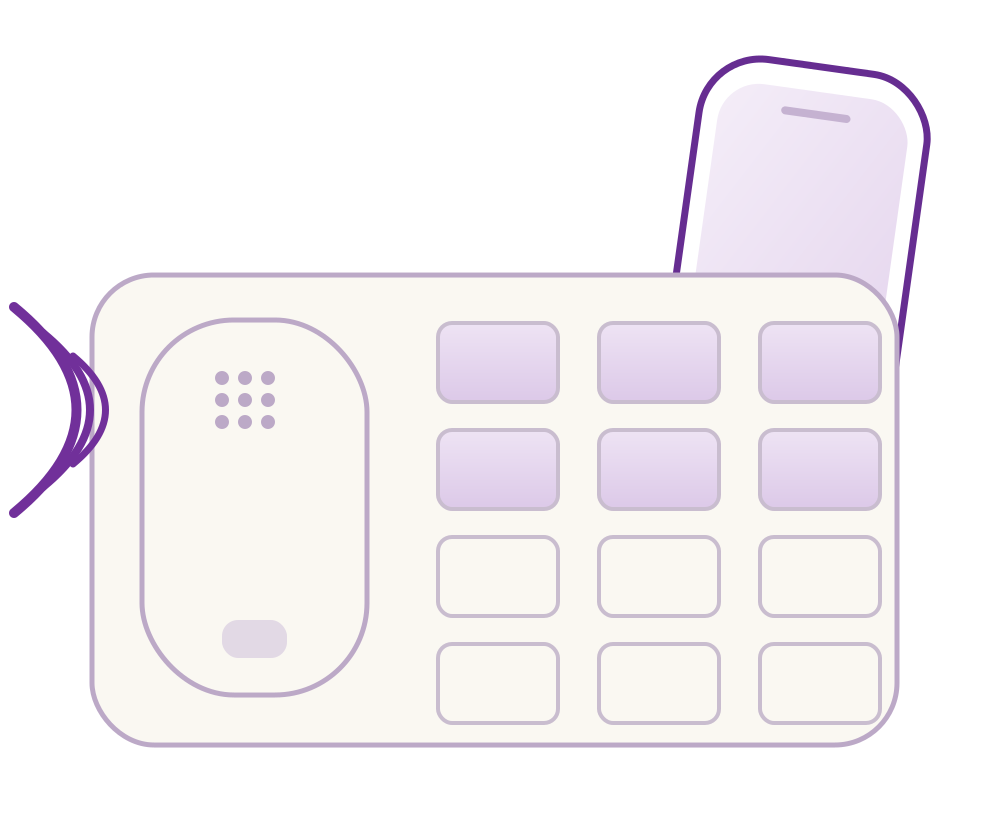
KindredMind Voice™ offers supported conversations on compatible cell phones and landlines. Friendly voices can answer and make supported calls; familiar family voices are Dementia-only and answer inbound calls. During a conversation, it can offer a gentle reminder about medicine, meals, and the visits they're looking forward to. Scheduled reminders by text, call, and email are available through the Reminders add-on. Nothing new to learn. Nothing new in the house.
KindredMind Voice answers supported calls while the service is active. A real conversation, not a recording and not a phone menu.
Choose MCI VoiceBeta for mild cognitive impairment and early memory changes, or Dementia Voice for dementia support. Both work on the same phone, with a different model for each.
Nothing new to learn. Cancel any time.
Your 14-day trial includes up to 30 minutes of conversation and one voice. No card needed.
A geriatric psychiatry perspective
“Seeing AI bring tangible relief to dementia patients through KindredMind's innovative voice companionship model surpasses most non-pharmaceutical treatments we have at the present time. This trajectory should make us all optimistic in our quest to employ non-pharmaceutical treatments in the battle against dementia.”
Shadee Giurgius, M.D.
Adult and Geriatric Psychiatrist · Medical Director, Healthy Brain Center · Clinical Advisor to KindredMind
SEE IT IN TWO MINUTES
A short look at what KindredMind Voice is, and what setting it up actually involves.
Watch video ↗What KindredMind Voice is all about
MCI Voice and Dementia Voice
A person noticing early memory changes and a person living with dementia are not at two points on the same path. They need different things. MCI Voice uses the early memory model; Dementia Voice uses the dementia model. Both are available through KindredMind Voice, chosen during setup.
Early memory changes
MCI VoiceBeta
They still run their own day. They lose a thread, repeat a story, need a nudge now and then. They would be insulted to be talked down to.
This model talks to them as an adult. It corrects gently rather than going along with things, and it picks up where the last conversation left off.
Dementia support
Dementia Voice
They call again eight minutes later with the same question. They may want reassurance, information or practical help. Acknowledge the feeling while checking what they need.
Dementia Voice is designed to respond warmly and avoid unnecessary argument. Clarification may still be needed for medication, medical care, finances, safety or emergencies; reassurance is not guaranteed.
Chosen during setup. You can change it later if their needs change.
Hear both
Friendly voices are available with both MCI Voice and Dementia Voice. Familiar family voices are available with Dementia Voice only, with the person providing the voice giving their own permission.
These samples show one option for each model: a friendly voice with MCI Voice and a familiar family voice with Dementia Voice. Dementia Voice also offers friendly voices.
Early memory changes
A friendly voice for mild cognitive impairment and early memory changes. Adult to adult, unhurried. Friendly voices are available with both MCI Voice and Dementia Voice. Familiar family voices are available with Dementia Voice only.
Dementia support
A sample call in a familiar family voice, for reassurance and company. Dementia Voice offers both friendly and familiar family voices. Familiar family voices are not available with MCI Voice.
Two ways it can sound
Yes, from the first call
Yes, from the first call
Not offered
Yes, when that person is 18 or older and gives their permission
A voice they know is part of Dementia Voice only, and it is added only when the person providing the voice is 18 or older and gives their own permission. Warm friendly voices are available with both MCI Voice and Dementia Voice, ready from the first call, with nothing for you to record.
Hear the MCI Voice and Dementia Voice samplesNothing new to learn. Cancel any time.
Your 14-day trial includes up to 30 minutes of conversation and one voice. No card needed.
The thing underneath both
Across twenty-one studies and more than six hundred thousand people, loneliness is associated with a 31% higher risk of dementia. The association held after the researchers accounted for depression and for social isolation, which are not the same thing as loneliness and are often assumed to explain it.
Luchetti et al., Nature Mental Health, 2024. Twenty-one cohorts, 608,561 people.
That is why we built a companion that talks, rather than one that reminds. This isn't a claim about brain health. KindredMind does not treat, prevent, delay, or slow dementia, and we will never tell you it does.
Why it's built this way
The I-CONECT randomized trial studied frequent structured conversation in socially isolated older adults; the conversations were with trained people, not AI.
Read about the I-CONECT studyA 2024 analysis across twenty-one cohorts and 608,561 people associated loneliness with a 31% higher risk of dementia, independent of depression and social isolation.
Read about loneliness and connectionIts early memory model uses adult-to-adult conversation, with continuity and gentle correction. This is a design approach, not evidence of a clinical benefit from KindredMind.
Read the MCI Voice Model GuideIts behaviour comes from simulated presence therapy, validation therapy, and Alzheimer Society of Canada phone-call guidance.
Read the Dementia Voice Model GuideAn answer when you cannot
You are still the one they want. KindredMind Voice does not take your place in their life, and it was never built to. It covers the hours you cannot be on the phone, so the supported calls can receive a consistent warm answer, while you remain their daughter or their son rather than needing to personally answer every call.
The heart of it
Everything that makes a call feel like a real conversation comes from you. Their routine. The people in their life. The questions they ask most often, and the answer you want given. The family news you want passed on. The topics and words they may welcome when the afternoon gets long. You write it once, and add to it whenever something comes to mind. Supported conversations can draw on it; accuracy and responses vary.
Breakfast, the walk, bingo on Thursday, a rest in the afternoon. Conversations anchored to what is actually happening today.
Who is who, who visited last week, who is coming Sunday, and the names that matter most.
The questions they ask again and again, answered the way you would answer them.
It only ever knows what you choose to tell it. Nothing is gathered from anywhere else.
A familiar voice with Dementia Voice
MCI Voice uses a friendly voice, ready without a recording. The familiar-voice stages below apply only to Dementia Voice. You record a short conversation during setup, and your voice is ready to answer that same day. After that it is up to you. Add more short sessions from your dashboard and your voice deepens in steps: the Refined Voice at thirty minutes, the True Voice at sixty, the Signature Voice at ninety. You are never asked to sit down for an hour.
Ready after 20-second express onboarding
A 20-second caregiver voice recording is required for familiar Voice and familiar dementia Presence. Presence also requires the caregiver photograph. Optional Sarah sessions in the Voice tab add more of your voice and stories.
At thirty minutes recorded
Your rhythm and your pauses, not just your tone, with a closer match as you add recordings.
At sixty minutes recorded
The way you carry a longer thought, and how you sound when you are being gentle.
At ninety minutes recorded
A progressively closer match to the recorded voice, which may feel familiar to some people.
Recording time adds up. Thirty minutes is a handful of short sessions whenever you have a moment, not one long sitting. The person providing the voice must be 18 or older and give their own permission.
Nothing new to learn. Cancel any time.
Your 14-day trial includes up to 30 minutes of conversation and one voice. No card needed.
Peace of mind, made visible
MCI Voice and Dementia Voice both offer a warm friendly voice. Dementia Voice can also use a voice they know, with that person's permission.
During a conversation, the companion can offer a gentle reminder about medicine, meals, appointments, or the visits they are looking forward to. Scheduled reminders are available through the Reminders add-on.
Caregivers can review summaries of supported conversations, including topics and recurring concerns. Summaries may be incomplete or inaccurate and should not replace checking with the person or care team.
Caregivers can review call summaries and receive supported alerts when configured. KindredMind is not an emergency service, medical device, or continuous monitoring service.
One dedicated, unlisted number for supported calls and messaging. Familiar family voices answer inbound calls only. Keeping the number private can limit who has access, but does not guarantee protection from scams or unwanted calls.
Set your real weekly availability once, and calls route around it.
Recurring topics, changes in how they speak, and a caring summary of how the month looked.
Available in fourteen languages: English, Spanish, French, Portuguese, Italian, Polish, Ukrainian, Russian, Greek, Mandarin, German, Korean, Hindi, Tagalog.
A simple score showing how complete your setup is and what to do next. The companion goes live only when everything is ready.
Change how it behaves in one tap and read every summary at your own pace. It can handle supported calls while the service is active, and you remain in control of when to take calls yourself.
Private by design
Everything you write about them is encrypted with AES-256 where it is stored, and protected with TLS while it travels. The key is held in a separate secrets manager, apart from the data it opens.
No identifying documents, no medical records, no financial information. Standard setup does not ask for a full legal name or a date of birth.
If you add a familiar voice to Dementia Voice, your recordings are used to build it and then deleted. There is no downloadable copy of your voice anywhere, and if you close your account it is destroyed. MCI Voice uses a friendly voice and does not require your voice recording.
It is not shared, resold, or reused.
KindredMind does not diagnose, treat, or monitor anyone, and it makes no claim to affect memory or cognition.
Almost nothing. The products built for this stage are pill reminders and emergency buttons, tools that watch for a problem, not someone who's just there. Neither one asks how the day went. Neither one is company. To understand the different role of prompts, see our guide to memory aids and reminders.
It will not use a voice they know when memory changes are early, even though families ask for it. It will not tell you it is good for their memory. It will not score your parent, and it will never ask a question it can mark wrong.
What it does instead is call them, on the phone they already use, at a time you chose. It arrives with a subject rather than asking how they are feeling. It picks up where the last conversation left off. And when something opens up, it goes deeper into it rather than moving along to the next thing.
None of it was invented here either. Never correcting comes from the Validation Method. Reassure, routine, reminisce and redirect are the Four Rs taught to certified dementia practitioners. A voice they know comes from simulated presence therapy. The structure of the early conversations comes from a published randomized trial.
Every one of those is a written standard, enforced in the system and checked after each call, not a description of how we hope it sounds.
The standards, in fullCall screening, simpler interfaces and conversational support serve different needs. Choosing among them depends on the person, the phone setup and the family’s support arrangements.
With a compatible telephone and supported configuration, the person can call in the usual way while the caregiver handles setup. A new companion device is not required for Voice, but phone and carrier conditions still matter.
Caregiver guidance can include reassurance and regular contact. It does not establish that call-access controls are inappropriate in every situation, endorse KindredMind, or demonstrate a clinical effect from AI conversation.
KindredMind can answer supported calls while the service is active. Device, carrier, account and service conditions can affect connection; an answer is not guaranteed.
Respectful conversation is a design principle. MCI Voice is designed to offer gentle correction when appropriate; individual preferences, understanding and responses vary.
Dementia Voice is designed to avoid unnecessary argument. The Validation Method is one communication approach, not a universal non-correction rule. Consequential facts may need clarification.
We will not tell you the companion never fibs. It meets her where she is, and sometimes that means agreeing that yes, it is her daughter on the phone. What we will tell you is what it never does: it never hurries her, never quizzes her, never talks down to her, and never treats her as a problem to be solved.
The principles behind thisVoices from the care community
Caregivers, advocates, and dementia care leaders see the value of reassurance that supports the person and the people who care for them.
“What initially stood out to me about KindredMind was the thoughtful way the company approaches the balance between reassurance, autonomy, and privacy.”
“I would have used KindredMind myself. Had it existed while I was caring for my own mother, hearing my voice, even when I could not physically be there, would have brought real comfort.”
“Looking back at caring for my dad ten years ago, I remember the constant toll of the ringing phone and the heavy guilt of missing a call.”
“In many ways, KindredMind reflects the same person-centred philosophy and approaches that I encourage for all caregivers.”
Plans
The same plans are available for MCI Voice and Dementia Voice. Every plan includes a voice companion, call summaries, supported alerts, and the tools to review what was discussed. Your companion can offer a gentle reminder during a call. Scheduled reminders by text, call and email, with wellness checks, are available as an add-on. Plans differ by how many call minutes you have each month.
Every plan includes
Essential
$129
USD / month
$179 CAD
300 call minutes a month
For one caregiver, with room for a conversation every day.
Your 14-day trial includes up to 30 minutes of conversation and one voice. No card needed.
Start your 14 day trialStandard
$179
USD / month
$249 CAD
450 call minutes a month
More time on the phone, plus Conversation Insights and Auto-Schedule.
Your 14-day trial includes up to 30 minutes of conversation and one voice. No card needed.
Start your 14 day trialComplete
$239
USD / month
$329 CAD
600 call minutes a month
The most time on the phone, plus month over month trends.
Your 14-day trial includes up to 30 minutes of conversation and one voice. No card needed.
Start your 14 day trialCare Circle Coming soon
750 minutes pooled across up to four caregivers.
By leaving your email you agree that KindredMind may contact you about the Care Circle waitlist by email. We will not use it for anything else, and you can ask us to stop at any time. See our Privacy Policy.
14 days free, no credit card. Extra minutes are $0.65 USD or $0.85 CAD each, and you choose whether to allow them.
MCI Voice is for mild cognitive impairment and early memory changes. Dementia Voice is for dementia support. Both work on an existing phone and use the same plans. Choose the model during setup and change it later if their needs change. MCI Voice is currently in beta; Dementia Voice is not.
Yes. A cell phone, a kitchen landline, or a big-button photo phone. Nothing new goes in the house and there is nothing to install.
No. They answer the phone the way they always have, or they call the number the way they always have. There is nothing to press and nothing to set up.
MCI Voice and Dementia Voice both offer a warm friendly companion voice. Dementia Voice can also use a voice they know, recorded by the person whose voice it is and added only after they give their own permission. A familiar family voice is not offered with MCI Voice.
Yes. The model is chosen during setup and can be changed later if their needs change.
Your plan includes a set number of minutes each month. Beyond that, extra minutes are $0.65 USD or $0.85 CAD each, and you choose whether to allow them at all.
You see summaries of what was discussed. Full call audio is not kept.
No. KindredMind cannot call for help and does not monitor anyone. In an emergency, call your local emergency number.
MCI Voice and Dementia Voice are designed around person-centered care. MCI Voice speaks adult to adult and can offer gentle correction. Dementia Voice focuses on reassurance and validation rather than arguing or correcting. Neither is intended to replace the person's relationships or the decisions they can still make.
Privacy & safety
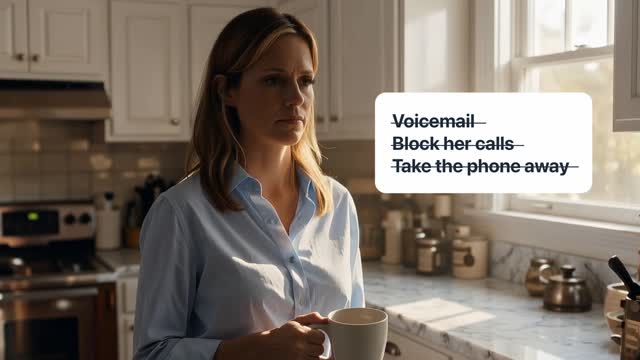
If you have tried everything