
The KindredMind team
Built with care for the people who carry so much.
KindredMind brings together lived caregiver experience, thoughtful technology,
and clinical perspective to help mild cognitive impairment and dementia families feel less alone.
Meet the people behind KindredMind
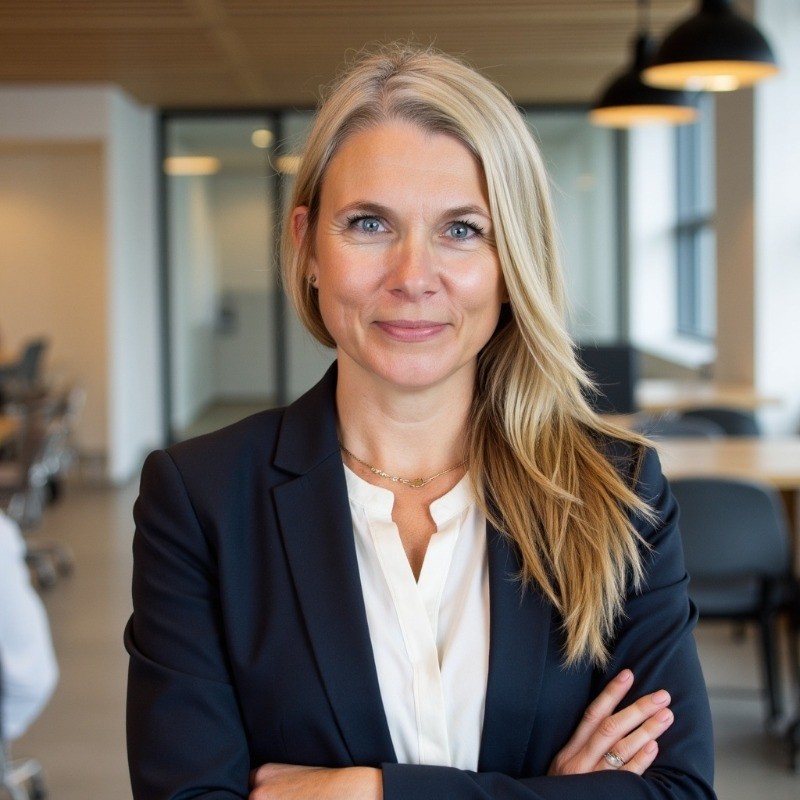
Co-Founder & President
Kirstin Thomas
Kirstin Thomas is the Co-Founder and President of KindredMind. She built it from lived experience: her mother lives with Alzheimer’s and vascular dementia in a memory care facility in Ontario, Canada, and would call again and again, reaching for the comfort and reassurance of a familiar voice Kirstin couldn’t always answer. Unable to find a tool that met that need, she built one, a voice companion that answers a loved one’s calls in the family caregiver’s own voice, grounded in simulated presence therapy and dementia-friendly communication guidelines.
Kirstin is an experienced executive and operator. She co-founded Snaile Inc., Canada’s leading smart parcel locker company, and as its COO and later President scaled it into a national leader serving major developers, REITs, and residential and hospitality properties, growing to more than 800 customer sites before its acquisition in 2024, including leading a rapid pivot to onshore manufacturing during the pandemic and winning national contracts against much larger U.S. rivals. She holds a Bachelor of Arts in Psychology and Sociology from the University of Toronto and studied design at OCAD University.
At KindredMind, she leads company strategy, operations, and the brand’s voice, building it as a growing suite of tools supporting people from mild cognitive impairment through the stages of dementia, alongside the families who care for them. Whether answering repetitive calls, offering companionship and conversation to combat loneliness, or carrying reminders through the day, the aim remains the one that started it all: making sure the person living with dementia feels heard and reassured, so caregivers can keep showing up for the people they love, without carrying the weight of every missed call.
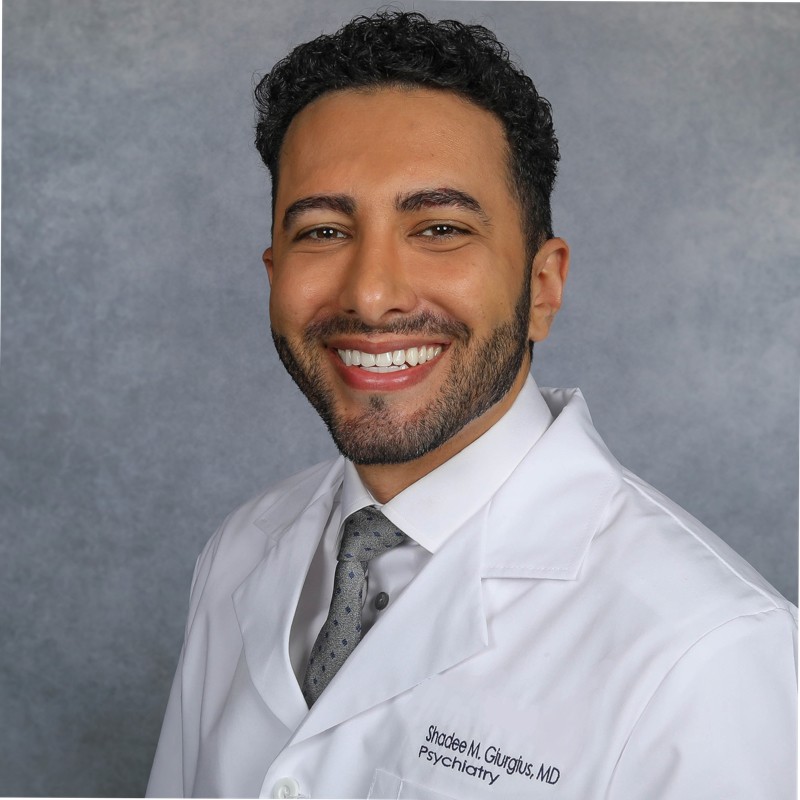
Adult and Geriatric Psychiatrist · Medical Director, Healthy Brain Center · Clinical Advisor to KindredMind
Shadee Giurgius, M.D.
"Seeing AI bring tangible relief to dementia patients through KindredMind's innovative voice companionship model surpasses most non-pharmaceutical treatments we have at the present time. This trajectory should make us all optimistic in our quest to employ non-pharmaceutical treatments in the battle against dementia."
Shadee Giurgius, M.D. is an adult and geriatric psychiatrist in Los Angeles, California, and Medical Director of the Healthy Brain Center, which he co-founded with his father, also a geriatric psychiatrist. There, they've coined their approach "Longevity Psychiatry", care aimed not just at preserving our years, but enhancing them. He sees patients in person and via telemedicine, conducting psychiatric medication management and comprehensive dementia evaluations.
He completed his geriatric psychiatry fellowship at UCSF and his residency at the UCLA-Kern Department of Psychiatry, and has spent over 20 years in the dementia field across advocacy, research at the UCLA Longevity Center, and clinical practice. He co-founded the Youth Movement Against Alzheimer's (now part of Hilarity for Charity), has been involved with OPICA, Los Angeles' center for memory impairment, for more than twenty years. He received its Founders Award in 2020 and lends his expertise to Leeza's Care Connection in support of family caregivers. In 2023, he was named an Honors Scholar in Geriatric Psychiatry by the American Association for Geriatric Psychiatry (AAGP).
As Clinical Advisor to KindredMind, Dr. Giurgius keeps the voice companion grounded in sound clinical practice, including how it answers a loved one's calls in the family caregiver's own voice, how it draws on validation and simulated presence, and how it supports familiar conversation and practical family caregiving. It also acts as a reminder tool for day-to-day routines; it does not claim to change dementia progression or determine how long someone can live independently. Across clinical care, research, teaching, and advocacy, his focus has stayed constant: the dignity of the person living with dementia and the wellbeing of the family caring for them.
CAREER
- Geriatric Psychiatry Fellowship: UCSF Department of Psychiatry
- Psychiatry Residency: UCLA-Kern Department of Psychiatry, Academic Chief Resident
- Medical School: University of Iowa Carver College of Medicine
- Undergraduate: UCLA, Psychobiology & Gerontology
- Diplomat, American Board of Psychiatry and Neurology
PUBLICATIONS
- Advanced McDonnell, M., Dill, L., Panos, S., Amano, S., Brown, W., Giurgius, S., Small, G., Miller, K. (2020). Verbal Fluency as a Screening Tool for Mild Cognitive Impairment. International Psychogeriatrics 32, 1055-1062.
- Shweta Balakrishnan, Shadee Giurgius (2012). The Youth Movement: The Future of Aging and Alzheimer's Research. Journal of Intergenerational Relationships, 10:2, 173-178.
- "UCLA Students Rally Against Alzheimer's." Shweta Balakrishnan, Shadee Giurgius. Aging Today Article, American Society on Aging Magazine Volume XXXII Number 4, July-August 2011.
LECTURES
- "Psychiatry for Psychologists" Psychological Care Institute (PCI), 2026
- "The Standard of Care in Adult & Geriatric Psychiatry" Grand Rounds, UCLA - Kern, 2025
- "Psychotropics in Older Adults" - UCLA - Kern, 2023
- "Advanced Psychopharmacology Neurocognitive Disorders" - UCLA - Kern, 2022
- "Can a PET scan help Veterans w/CTE better plan their future? - EBM Series" - UCLA - Resnick, 2021
- " Are Psychiatrists and Conservators/the Legal Sytsem speaking the same language" - M&M - UCLA, 2020
- "Music Theraphy and Dementia" Outpatient Family Medicine Didactics, University of Iowa, 2015
AWARDS
- 2024 Professional Integrity Award - UCLA - Kern Department of Psychiatry
- 2024 Academic Leadership Excellence Award - UCLA - Kern Department of Psychiatry
- 2024 Outstanding Academic Presentation Award - UCLA - Kern Department of Psychiatry
- 2024 Exceptional Mentor to Medical Students Award - UCLA - Kern Department of Psychiatry
- 2023 AAGP Honors Scholar in Geriatric Psychiatry
- 2020 Founders Award - Older Persons In Caring Atmospheres (OPICA)
- 2017 Heroic Act Award - Los Angeles Fire Department - EMT Unit
- 2013 Betty Ford Center - Summer Institute for Medical Students (SIMS) Addiction Scholarship
- 2013 Minority Medical Student Summer Mentoring Program Fellowship Awrad - APA
Support that starts with understanding.
Learn how KindredMind approaches every conversation with warmth, familiarity, and respect.
The full story
My Mom Has Dementia and Keeps Calling. Here Is Why I Built KindredMind.
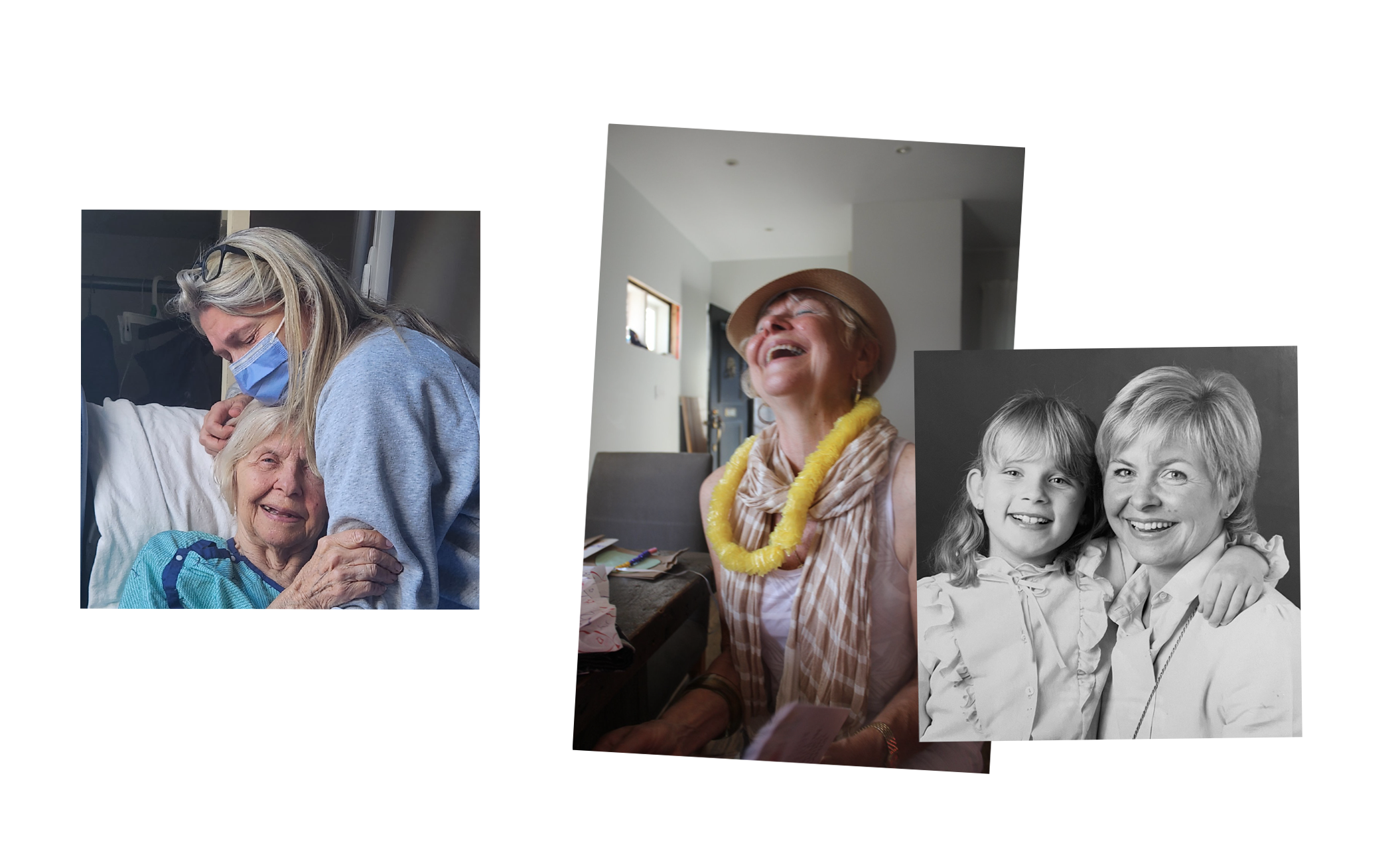
If you want to read everything that led here.
It's long. But for the families who want to understand, every word matters.
I am 50 and I stillllll say “mama!” with panicked urgency when I get startled. This auto-response tells me my mom was always by my side as a kid, to pick me up and dust me off. Growing up, it was just the two of us figuring life out, together. My mom patched every corduroy knee, wiped every tear, and built in me a quiet strength shaped by her fierce loyalty, optimism and unwavering “can do” spirit. She is the reason I know what strength and commitment look like.
Over the years, I began to notice some minor memory issues and folded timelines. We kind of just chalked it up to age-related forgetfulness, nothing that merited real concern. It wasn’t until a fall prompted us to get some imaging done that the scans revealed minor frontotemporal lobe atrophy. We had already moved her closer to us during COVID, anticipating her future care needs. We thought we were prepared.
There was a family history I was very aware of. My mom’s mom, my grandma, had memory issues in her later years. Back then they didn’t diagnose with much precision, they just called it Alzheimer’s and left families to figure out the rest. I was in high school, but I remember fielding those calls, the same confused questions, the same need to hear our voice. The volume always spiked right before bedtime. So we were watching for it. We just didn’t expect it to move this fast.
We were not prepared.
The Year Everything Changed
Through 2024 and into 2025, I became the logistics of my mother’s life. I drove her to the gym, to all of her appointments, to a friend’s place out of town, to her cat’s vet, to events, to the grocery store. My mom lived on her own in her lakefront condo. She cooked, she entertained, she was fit, agile, and vibrant in a way that made her seem a decade younger. A lifetime at the gym had left her stronger than most people half her age.
In April 2025, her MoCA score had fallen significantly (a brief screening test used to detect early signs of cognitive decline). Her doctors reported her to the Ministry of Transportation, who suspended her license. My mom appealed, she wasn’t ready to accept it. She wasn’t self-aware. She paid for a retest and studied for it. That summer she failed the retake and was told she was not a candidate for driver rehabilitation. My mom sold her car.
That was the beginning of the real caregiving. I have three kids, two dogs, a marriage, and a career. I was now running two households. We visited many local and out-of-town retirement homes that summer. My mom couldn’t see a life in any of them. She had her condo, her routines, her independence.
October, 2025
On October 20th, my mom began having TIAs (transient ischemic attacks), often called mini-strokes. At least, that’s when I became aware. It’s possible she had experienced them earlier without detection.
The first time, she called early that morning and said she wasn’t feeling well. She described a strange sensation, like the room was spiraling and she couldn’t find solid ground. Her left leg felt unsteady. I didn’t yet understand what we were dealing with. I brought her to our house to keep her comfortable and monitor things.
The second TIA happened in my family kitchen, in front of my husband and my daughter. My mom was there one moment and then something had shifted, her eyes, her words, the way she held herself. That was the last time she was fully herself.
I rushed her to the hospital. She had another TIA in the car on the way there. That image haunts me. The hospital ran CT scans and discharged her a few days later. My mom moved into our home.
We were doing twice-daily cat feeds at her condo, 25 minutes away. A local retirement home became the plan, our house was in the forest, too far from the hospital if something happened again, and our two dogs were no match for my mom’s cat. We were able to secure a spot for my mom at a local independent living retirement home. Things were moving uncomfortably fast.
November 1st and 2nd
On November 1st, we brought my mom to her condo so we could begin packing up her home. I was watching her like a hawk, on high alert for any sign of a stroke. That afternoon, I noticed subtle facial drooping and slurred speech. It was so subtle that I thought I was imagining it, but my daughter looked at me with fear so she caught it too. I called 911. My mom was rushed to the hospital but discharged with clear CT scans. That night, my husband and I decided to stay with my mom at her condo.
On November 2nd, my mom was resting but chatting away with my husband when he noticed something wasn’t right with her. He asked if she was okay. She said: “I think so, but something is wrong with my left arm.”
I stepped in, took stock, and called 911 again. When the paramedics arrived, they ran through their tests: raise your arms, push against my hands, press your foot like you’re pushing a gas pedal. My mom passed everything. She was strong. Years at the gym had built a strength that, in this moment, was misleading the very people trying to help her, masking what was really happening. They were debating taking her in because they knew she was discharged less than 24 hours before.
But when I asked the paramedics what they would do if this were their mom, they said they would take her.
My mom stayed in hospital for all of November. She lost mobility in her left side completely, leaving her wheelchair-bound. She lost words, memories, context. The diagnosis was a basal ganglia stroke.
If you are in those first weeks after a diagnosis and looking for someone to tell you what comes next, I wrote that too: your parent was just diagnosed with dementia.
Where She Is Now
My mom is in a local retirement home that can meet her care needs. She has people around her. I visit almost every day. My husband and my kids visit often. She has friends who come to see her. By every objective measure, she is not alone.
But she calls. Several times before lunch. Sometimes while my family is trying to sleep.
She calls because she needs to hear my voice. Not a friendly PSW, not another resident. Me, the voice she has known for 50 years, the voice that means everything is going to be okay. I understand this completely. My mom is not doing this to make me feel guilty or to inconvenience me. She is scared, and feels alone, and the thing that helps is the sound of her daughter. I get it. I did this with my grandma.
The problem is that I cannot work effectively and manage those calls. I cannot be on the phone ten times before noon and also be present for my children and also do my job and also visit every single day. Not sustainably. Not without a call going unanswered.
“She doesn’t need me to answer every call. She needs to hear my voice, warmly, patiently, telling her she’s loved and that I’ll be there. That part I can give her even when I can’t pick up.”
What We Built
KindredMind is a voice companion built for situations like ours. It answers calls on behalf of a family caregiver, in that caregiver’s voice, using everything the family has told us about the person: their life story, their family, their daily routine, the things that calm them, the questions they always ask.
You choose the voice: your own voice, or a warm friendly voice that still knows your loved one's world. The same voice can also reach out, with scheduled check-in calls and gentle reminders, not only answer calls.
When Mom calls and I’m in a meeting, KindredMind answers. She hears my voice. It knows she’s going to ask about when I’m coming. It knows how to answer. It knows her care aides by name. It knows she gets anxious in the late afternoon and it knows the kind of reassurance that helps settle her.
She’s not talking to a machine in the way that word implies. She’s talking to something that sounds like me, knows her the way I know her, and is patient in a way that I, a human being with limited reserves, sometimes cannot be after the ninth call of the morning.
And afterward, I can read a summary of what they talked about. If she seemed distressed, or something came up that I’d want to know, I’m told. I stay connected to what is happening in her day, even when I couldn’t pick up.
That’s how KindredMind works. That’s what we built. Not because it’s a clever technology. Because there was no other way to keep showing up for her the way she deserves.
“In my experience, some of those calls end more settled. I get a summary, and I still visit every day. That is one family’s experience, not a promised outcome.”
The Questions We Ask Ourselves
I want to be honest about the hard questions, because they deserve honest answers.
Is this deceptive? We think about this constantly. The goal is not to deceive, it’s to provide comfort and care. A person in my mom’s situation who calls for reassurance needs to feel reassured. The alternative isn’t that they understand they’re talking to a voice companion; the alternative is that the call goes unanswered, or is answered by someone who sounds stressed and distracted. We’ve chosen the option that serves her wellbeing. We address this fully on our ethics page.
Does this replace real connection? No. KindredMind is designed to handle the calls that couldn’t be answered the way they deserved, not the calls that could. The real connection is not replaced. The service can answer calls the caregiver cannot personally take and provide a summary afterward.
Is this better than the alternatives? We’ve thought carefully about the other options families consider, taking the phone away, call blocking, voicemail, medication. Each of them manages the symptom: the call reaching your phone. None of them address the cause: the separation anxiety that drives it. KindredMind answers calls in a familiar voice; it does not claim to address or resolve the cause of anxiety. Read our full comparison of every alternative →
Is this right for every family? No. We built this for a specific situation: a caregiver who is present, engaged, and overwhelmed by call volume. We are not a replacement for care. We’re a tool for the families who are already doing everything they can and still overwhelmed by the weight of it.
There are three voice options, and none is a lesser choice:
- Initial Voice: ready after 20-second express onboarding, with optional Sarah sessions from the Voice tab for deeper voice detail.
- Refined Voice: built from additional training sessions for a richer, more consistent voice.
- Friendly Voice: a warm, steady companion voice for families who would rather not use their own voice. It still knows your loved one's world.
Where We Are Now
My mom still calls. KindredMind only answers the calls that I can’t take. I get a summary, and I still visit every day.
KindredMind gives me another way to cover calls I cannot personally answer. I can stay informed through summaries while deciding which calls need me directly. That is a practical capability, not a promise about caregiver burden or clinical outcomes.
That’s the whole thing. Not a product built to create distance. A way to keep showing up for someone you love, even when you can’t always be there in the moment.
If you want to understand the technology, read our Your Voice Guide, which walks through how your voice is built from short interview sessions and how it deepens over time. If you’re wondering how KindredMind handles a real conversation, learn how KindredMind works.
30-day guarantee
Express onboarding in 20 seconds
Get Started →